SEWER TESTING RENO, NV
Sewer Testing in Reno, NV
Sewer testing in Reno, NV helps identify hidden leaks, blockages, damaged lines, and connection problems before they turn into larger repairs. Call today for a fast, free estimate.
- Licensed & Insured
- Locally Owned
- Serving Since 2016
Get Your Free Quote
Confidential · We respond within one business day
Home › Sewer Testing
Sewer testing in Reno, NV gives property owners a clearer picture of what is happening inside a private sewer line before deciding on cleaning, excavation, or repair. Reno Septic Service helps evaluate sewer and wastewater lines for blockages, leaks, damaged sections, poor flow, and connection concerns. Testing can be useful when drains keep backing up, odors return, a line has an uncertain route, or you need more information before a repair or property transaction.
We provide practical sewer line diagnostics for homes, rental properties, and businesses throughout the Reno area. Depending on the line, symptoms, and available access points, the evaluation may involve visual inspection, flow observations, locating, or other targeted testing methods. If the problem involves a septic property, we can also coordinate the findings with our septic tank service. Call (775) 305-6738 or request your free quote.
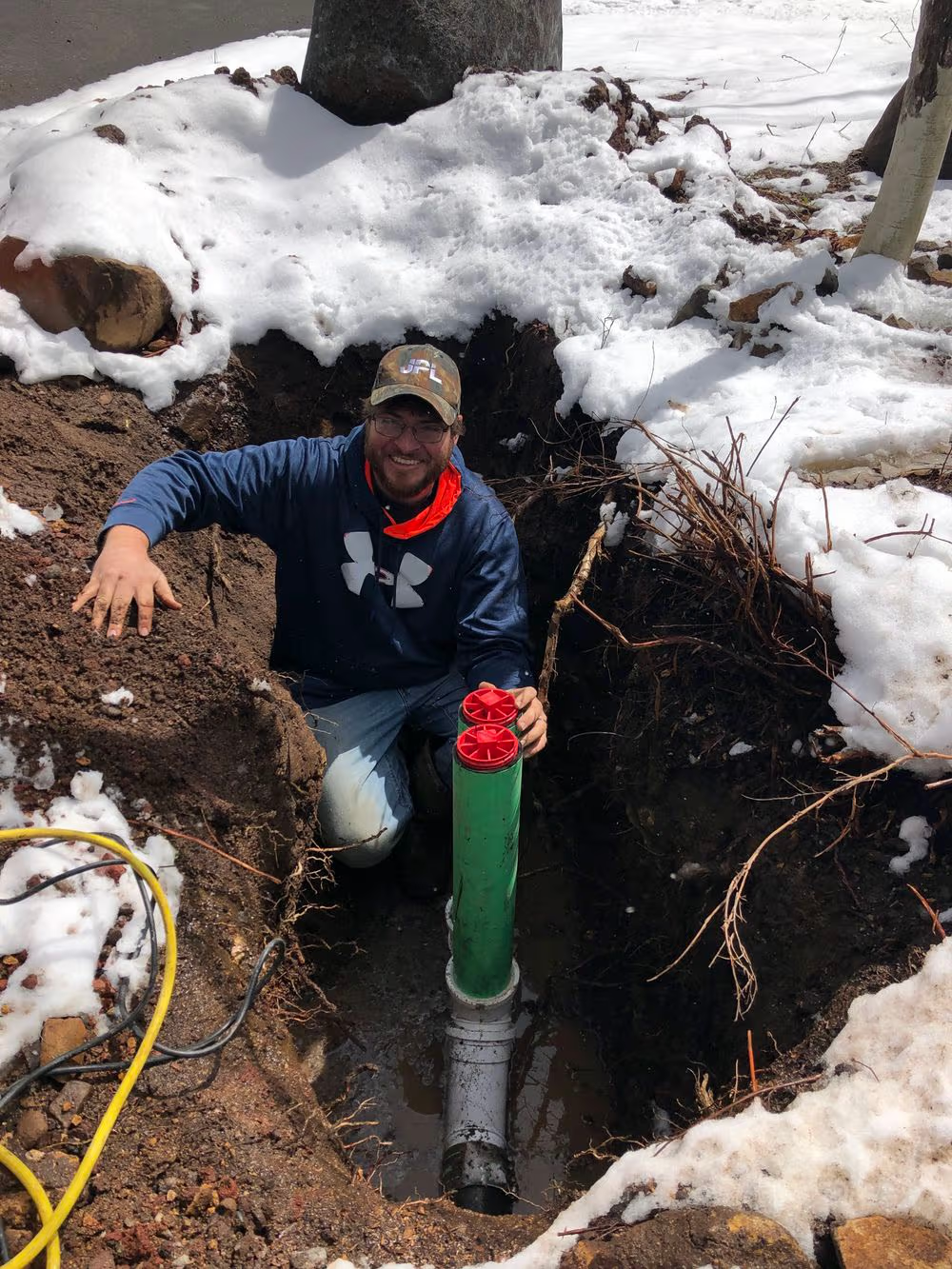
Sewer Testing Tailored to Reno Properties
Sewer problems do not all have the same cause. A slow or backed-up line may be dealing with grease, wipes, roots, scale, a shifted joint, a sagging section, a damaged pipe, or a problem farther downstream. Testing helps narrow down the issue before anyone assumes the entire line needs to be replaced.
We begin by asking what you are experiencing, where the symptoms appear, how often they happen, and whether the property is connected to a public sewer or an onsite septic system. A backup affecting one fixture can point to a different problem than several fixtures draining slowly at the same time. Recurring symptoms after previous cleaning can also be a reason to look more closely at the condition of the line.
Properties around Reno vary considerably in age, pipe material, layout, slope, access, and connection type. Some have an accessible exterior cleanout, while others require a different entry point. Older properties may also have additions, past repairs, or line routes that are not obvious from the surface. We use the available information and site conditions to choose a practical testing approach instead of treating every sewer call the same way.
How We Test Sewer Lines and Connections
The first step is identifying the best accessible point to evaluate the line. We review the symptoms, locate available cleanouts or access points, and determine whether the concern is likely to involve the building sewer, private lateral, connection, or another part of the wastewater system. The goal is to test the area that is most likely to explain the problem without creating unnecessary disturbance.
When a camera inspection is appropriate and the pipe is accessible, a sewer camera can be advanced through the line to look for visible blockages, root intrusion, broken or separated pipe, heavy buildup, offsets, low spots, and other conditions that may interfere with flow. The camera also helps show where a problem appears in relation to the access point. If a section cannot be viewed clearly because the line is completely blocked or heavily coated, cleaning or another step may be needed before a useful visual inspection can be completed.
Testing may also include observing how water moves through the line, checking accessible connections, and using locating equipment when the route or approximate position of a problem needs to be established. On a septic property, the building sewer between the structure and septic tank can be evaluated separately from the tank and drainfield. On a sewer-connected property, the private lateral can be checked before concluding that the problem is in the public main.
After testing, we explain what was observed and what the findings do and do not show. A useful sewer test should help you make the next decision, whether that means routine cleaning, targeted septic or wastewater system repair, additional diagnosis, or no immediate repair at all.
What Sewer Testing Can Identify
Sewer testing is most valuable when it turns a vague symptom into a more specific problem. A line that appears open from the surface can still have roots growing through a joint, a partial obstruction, a cracked section, an offset connection, or a low area that repeatedly holds water and debris. These conditions can create recurring clogs even after the line has been cleared.
Testing can also help identify where a blockage or damaged section is located, whether the issue appears isolated or extends through a longer portion of pipe, and whether the line is flowing normally at the time of the inspection. On properties with septic systems, it can help separate a building-sewer problem from a tank or downstream system concern. If the tank itself is full or overdue for maintenance, septic tank pumping may be the appropriate next step instead of sewer-line repair.
No single sewer test can guarantee the condition of every buried component. Cameras show what is visible inside accessible pipe, and some defects can be hidden by standing water, buildup, an obstruction, or an inaccessible section. We explain those limitations clearly so the findings are used as practical diagnostic information rather than presented as certainty where the line could not actually be evaluated.
When Sewer Testing Makes Sense
Sewer testing in Reno is often requested after repeated drain backups, slow drainage throughout the property, gurgling fixtures, persistent sewer odors, or a clog that keeps returning after cleaning. It can also be useful before a major sewer repair so the work can be focused on the section that actually needs attention rather than excavating based on guesswork.
Property transactions are another common reason to test a sewer line. The private wastewater line is buried and normally cannot be evaluated during a standard visual walkthrough. Testing can provide additional information about accessible portions of the line before a buyer, seller, landlord, or property manager makes a repair or maintenance decision.
Testing may also make sense after landscaping, excavation, construction, or heavy equipment activity near a known sewer route, especially if drainage symptoms appeared afterward. If the line location is uncertain, locating it before future excavation can help reduce the chance of accidental damage. For septic properties, knowing whether the problem is between the building and tank can prevent unnecessary work on the rest of the system.
Sewer Testing Cost Factors in Reno, NV
The cost of sewer testing in Reno, NV depends on the type of diagnostic work needed and how easily the line can be accessed. A straightforward evaluation through an accessible cleanout is different from a line that is completely blocked, difficult to reach, unusually long, or requires additional locating before the problem area can be identified.
Important cost factors include the number and location of access points, the length and diameter of the line, whether the pipe needs to be cleaned before it can be viewed, the amount of time required to reach the area of concern, and whether line locating or additional testing is needed. Commercial properties and larger wastewater systems may require a different scope than a typical residential lateral.
If testing shows that cleaning or repair is needed, we explain that as a separate recommendation rather than treating the diagnostic visit as automatic authorization for additional work. That distinction matters because the purpose of testing is to learn what the line is doing first and then choose the most appropriate response.
We provide clear estimates based on the known scope and explain anything that could change once access and line conditions are confirmed. The objective is useful diagnostic information without turning a sewer testing appointment into unnecessary work.
Common Sewer Line Problems and What to Do Next
Common sewer line problems include root intrusion, grease and debris buildup, wipes or foreign material, cracked pipe, separated or offset joints, corrosion, crushed sections, low spots, and poor connections. Some cause sudden backups, while others develop gradually and show up as recurring clogs, slow drains, or odors. Testing helps determine whether the symptom is likely to be solved by cleaning or whether the line itself appears damaged.
If a camera or other diagnostic step finds a specific defect, the next move depends on its location, severity, pipe material, access, and whether the rest of the line is still serviceable. A localized problem may support a targeted repair. A line with widespread deterioration may require a broader solution. If no structural issue is found, routine cleaning or monitoring may be more appropriate than excavation.
For properties connected to Reno’s municipal sewer system, the distinction between the private lateral and the public main matters. The City of Reno explains that the lateral from the home or business to the City main is private property-owner responsibility, while the City maintains its sewer mains. If testing suggests the private line is clear and the problem may be beyond the lateral, the appropriate utility or municipality may need to evaluate its system.
Before the appointment, avoid unnecessary water use if the line is actively backing up and tell us about any recent drain cleaning, repairs, construction, or known line locations. Make accessible cleanouts available if possible and keep vehicles or stored items away from the work area. After testing, keep the findings with your property records so future cleaning, repair, or excavation starts with better information.